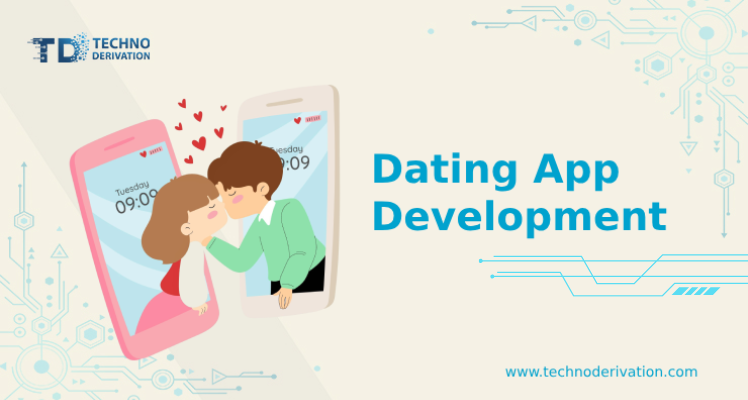
The market for online dating in the United States crossed $3.2 billion in revenues in 2026. It is growing at a rapid pace. If you are an entrepreneur or a startup looking to enter this space, understanding the different types of dating apps and how each one is built is your first and most important step. From a basic Tinder clone development USA project to a full-blown AI matchmaking dating app, every product type has its own architecture, audience, and business model. This guide breaks them all down – plainly, practically, and with an eye on what investors and users actually want right now.
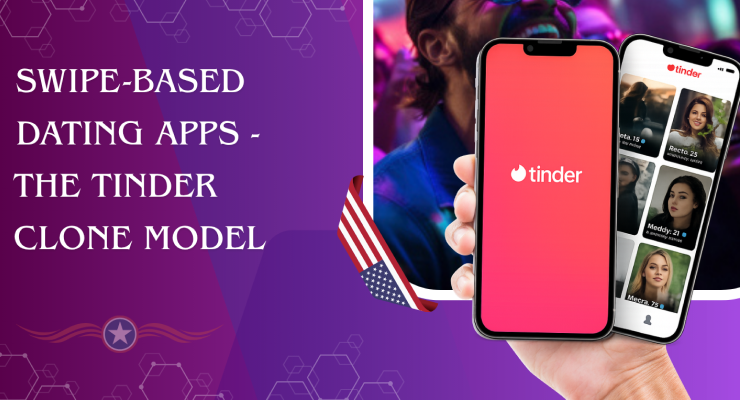 When most people think of a dating app, they picture the classic swipe-right-swipe-left experience that Tinder popularized. Tinder clone development in USA remains one of the most requested app categories in 2026 – but the clone concept has evolved. Modern swipe apps are no longer simple card-stack UIs. They incorporate behavioral algorithms, location intelligence, and dynamic content feeds that make every session feel fresh and personal.
What separates a good Tinder clone from a generic one is depth under the surface. Developers build advanced preference engines that learn from in-session behavior – not just age and location filters. If your users keep rejecting profiles with low bio completion, the algorithm silently deprioritizes those, improving match quality without the user ever touching a setting.
Off-the-shelf white-label dating scripts look cheap and perform worse in App Store rankings because Apple’s and Google’s reviewers now flag templated dating apps more aggressively. A purpose-built dating app development USA project from scratch – even a Tinder-like one – gets better organic placement and user retention from Day
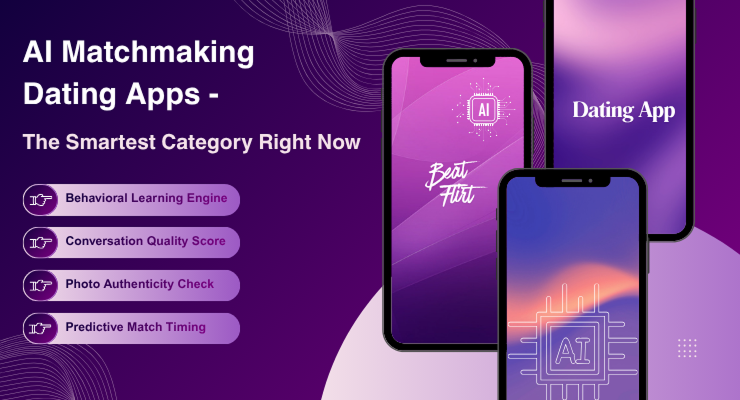 The single biggest trend in dating app development USA heading into 2026 is the shift from user-driven swiping to machine-driven compatibility scoring. An AI matchmaking dating app uses large language models, computer vision, and behavioral data to serve you matches that actually make sense – not just geographically nearby strangers.
Here’s what that looks like in practice: when a user signs up, they go through a multi-dimensional onboarding that captures values, communication style preferences, deal-breakers, and even how they write. The app’s NLP engine then builds a semantic profile – a vector representation of who this person is – and matches them against the vector space of all other users. Distance in this multi-dimensional space predicts compatibility far better than a checklist of hobbies ever could.
Tracks in-app actions – who they message first, how long conversations last, when they unmatch – to continuously refine their compatibility profile.
NLP models evaluate the quality of chat interactions and surface “high potential” matches who are actually engaged – not just profile-browsing.
Computer vision scans profile photos for authenticity, filters out catfish attempts, and even suggests which photos perform best for each user.
The system learns when a user is most likely to respond and surfaces matches during those high-engagement windows — dramatically improving connection rates.
The stack of technology for the AI matchmaking app usually has an ML-based Python Backend (TensorFlow or PyTorch), an engine for recommendation that is modeled on Netflix’s collaborative filtering model, a vector-based database such as Pinecone or Weaviate and a time-based inference service that delivers match suggestions in milliseconds. It’s a complex process which is why working with a team of experts like Techno Derivation makes a significant improvement in the time to market and precision.
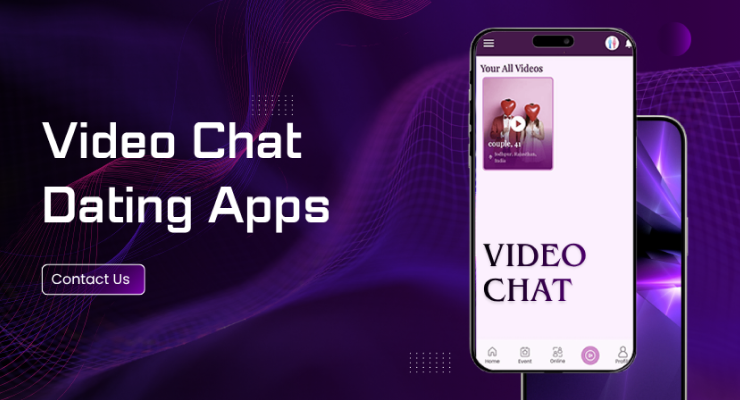 The pandemic permanently changed how people feel comfortable meeting strangers. Video chat dating app development exploded after 2020 and has not slowed down. Today, users actively prefer apps that let them video-call a match before meeting in person – with 67% of Gen Z daters citing video chat as a trust-building requirement, not just a nice-to-have.
But video dating apps are technically complex. You are not just adding a WebRTC call button to a swipe app. The best video chat dating apps are architected around the video experience – which means low-latency infrastructure, in-call reactions and games, optional blur/filter layers for comfort, and strict moderation pipelines to handle inappropriate behavior in real time.
For monetization, video chat dating app development works especially well with a freemium model: free users get a limited number of video calls per day, while premium subscribers get unlimited calls, priority matching, and access to group speed-dating events. This funnel converts users at notably higher rates than text-only apps because video calls create emotional investment quickly.
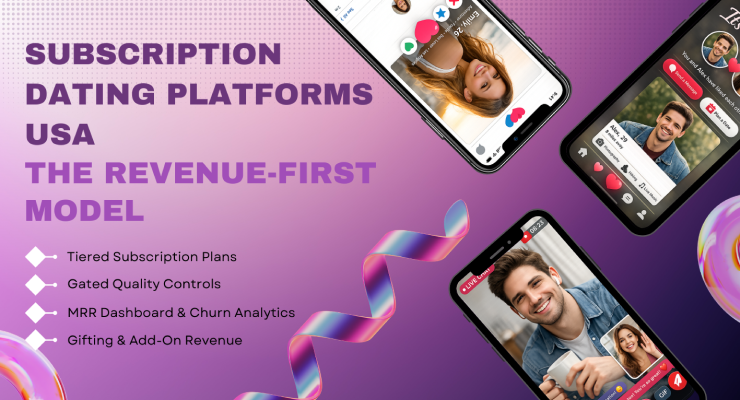 While ad-based and freemium apps dominate the download charts, subscription dating platform USA products often generate significantly more revenue per user. Platforms like Hinge+, Match Premium, and niche subscription-only apps prove that serious daters will pay $25–$50/month for a curated, higher-quality experience.
This is a deliberate strategy that paying to access the account creates some skin. Subscribers who pay for access are more thorough in their profile and send out more relevant opening messages and have more satisfied customers. If you are building for an upscale demographic – professionals in their 30s and 40s, divorcees re-entering the market, or niche communities like faith-based or career-focused daters – a subscription model should be your revenue architecture from the start.
Build Free, Premium, and Elite tiers. Each tier unlocks features progressively – read receipts, advanced filters, curated daily picks, concierge matching.
Profile quality gates – LinkedIn verification, photo review, income/career validation – ensure your subscriber base stays high-caliber.
General dating apps compete in the most crowded market imaginable. Niche dating apps – built around religion, dietary lifestyle, profession, hobby, or shared values – consistently outperform general apps in user retention and word-of-mouth growth. An Jewish dating application, vegan relationship app, mobile dating app for medical professionals or a site for outdoor lovers all are part of a larger community which already shares a shared culture as well as a common vocabulary and connection. That removes friction from the earliest and most difficult stage of dating: establishing common ground.
The development scope for niche apps is often leaner than a general platform – you can launch with a more curated feature set – but the community management layer is more important. Forums, events integration, group video dates, and shared activity planning features matter far more in a niche dating app than in a general one.
The ideal dating application for your company is determined by three interconnected factors that include your demographic target the budget you have for initial development and the income structure. Here is a straightforward framework:
The world of online dating within the USA is rapidly evolving, and there are multiple models of apps competing to attract the attention of users and investors’ curiosity. From swipe-based applications and AI matchmaking platforms to video-first experiences, subscription-driven platforms, and more, every type has different audiences and has unique goals for business.
A successful business in this space is not only about the speed of launch, it is also about choosing the most appropriate model that aligns with the needs of users as well as budget and growth. In contrast, Tinder replicas offer rapid speed, and AI and video-based apps provide better engagement and retention. In addition, subscription and niche platforms generate more profits per user. In the end, the best approach is to blend innovation with solid UX and a well-defined strategy for monetization to create an affordable and sustainable dating service.

























Multiple lines of text that form the lede, informing new readers quickly and efficiently about what’s most interesting in this post’s contents.
Get Free Consultation Call

Shipra Path, Mansarovar, Jaipur, Rajasthan - 302020, India
+91 95498 28228
Newsworld, 30 Charles St,Leicester LE1 3FG, United Kingdom
sales@technoderivation.com
Street J82 Road L125 Garden Street 2 Plateaux Vallons Cocody Abidjan
info@technoderivation.com